 Hesham Khalafallah
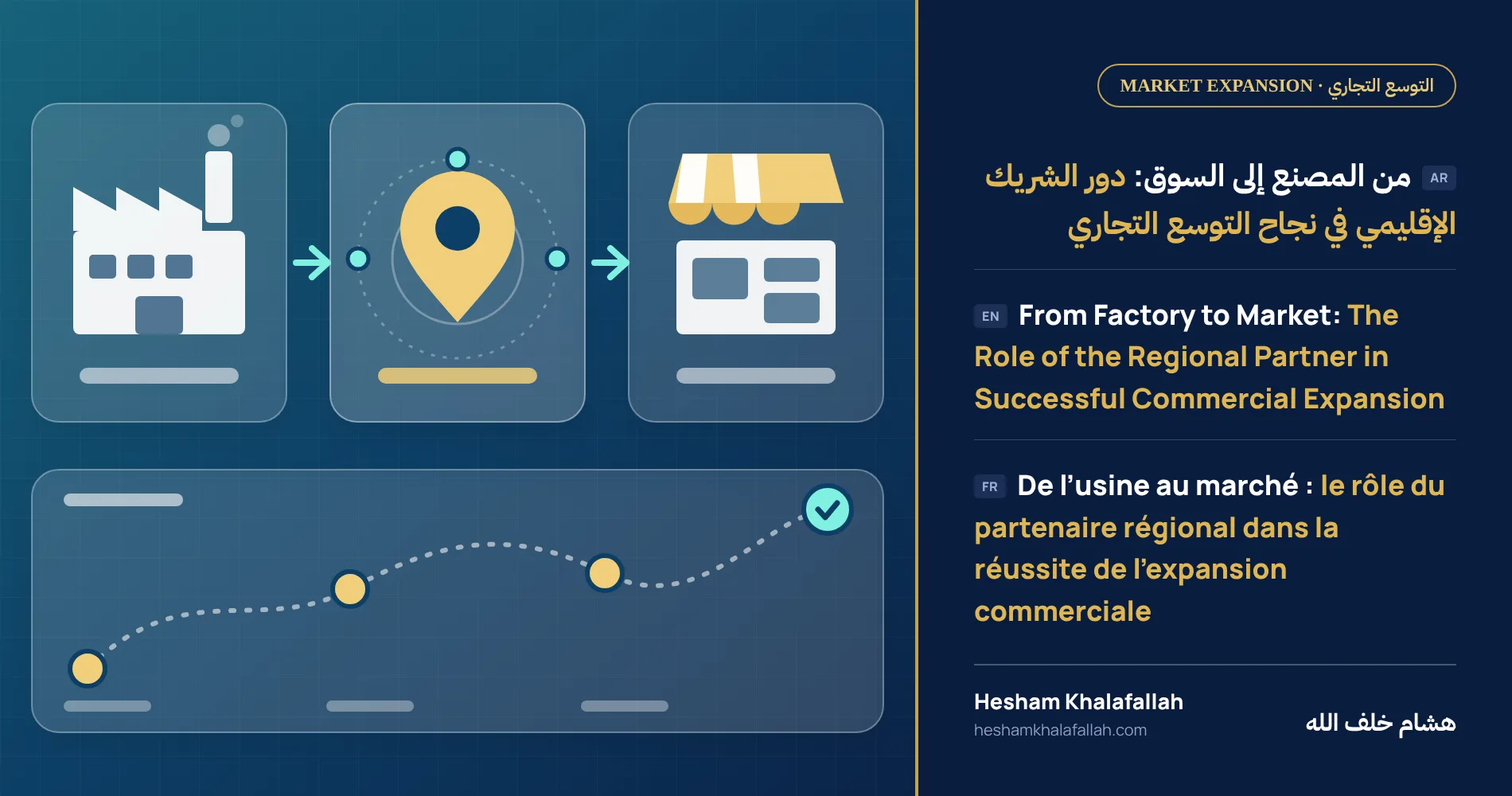
In my work with technology and education companies considering expansion into new markets, I notice that effort is often concentrated on the product: its quality, features and price. This is undoubtedly important. But the question that decides the success of expansion often comes after that: who will bring this product to the customer in the new market, serve them after the sale, and protect the brand’s reputation there?
This is where the regional partner comes in. It is not just a distributor that buys and sells, but an extension of the company in a market it does not know well. The best partnerships I see are built on the basis that the success of one side is tied to the success of the other.
The first impression: “We will sell directly from the factory”
This idea looks tempting, because it keeps the full margin and control. But it overlooks what a new market requires: licenses, language, buying culture, a network of relationships and fast local service. Many companies discover that building these capabilities on their own is slower and more expensive than expected, and that the market does not wait.
What does a regional partner actually provide?
I see the value of a regional partner spread across six areas:
• Market knowledge: knows the real customers, how they make decisions, when budgets are set and who the actual competitors are.
• Relationships and credibility: holds the trust of local bodies built over years, and presents the new brand in an acceptable light.
• Compliance and licensing: understands regulations, approvals, customs and local requirements, saving long periods of trial and error.
• Sales and distribution: has channels, a sales team and local stock, or a fast ability to deliver.
• After-sales service: installation, training, maintenance and support in the local language and at the right time.
• Feedback: passes to the factory what customers actually want, so the product improves according to market need.
The other side: mistakes that keep repeating in choosing and managing a partner
In all honesty, I should mention the mistakes I see repeated, because knowing them protects the expansion from the start:
• Choosing the first offer that arrives: an enthusiastic partner who lacks the real capability or the right relationships for the sector.
• Relying on price alone: the partner’s ability to serve, train and continue is neglected, and that is what keeps the customer.
• Open exclusivity with no targets: exclusivity is granted with no commitment to sales levels or clear plans, so the market freezes.
• Leaving the partner without support: no marketing material, no technical training and no regular contact, followed by surprise at weak results.
• No clarity on margin and brand: no agreement on prices, discounts and use of the name, which breeds later disputes.
Criteria I rely on when choosing a partner
• Strategic fit: Does it see the market and the product as we do, and does it want to invest for the long term?
• Operating capability: a sales, service and training team, and financial strength to carry the sales cycle.
• Reputation and relationships: real references from customers and bodies in the same sector.
• Honesty and transparency: clarity in reports and figures, and openness to review.
• Handling other products: does it represent direct competitors, and how will it manage that conflict?
From agreement to success
Choosing the partner is only the beginning. A successful partnership needs a written agreement that sets the territory, targets, prices, training, service responsibilities, brand rights and an exit mechanism, and regular follow-up: periodic meetings, shared performance indicators, a joint marketing plan and field visits.
I advise starting with a pilot phase in a specific region or sector, to learn what actually works before expanding. Trust between the factory and the partner is built through shared results, not through the contract alone.
A good regional partner does not only sell your product, but builds your name in a market you have not yet entered.
Conclusion
What I want readers to take away is that successful commercial expansion does not rest on the product alone, but on whoever carries it to the market and stands behind it. Those who choose their partner carefully, support it and measure performance with it, save time and money and build a stronger presence.
If your company is considering entering a new market, in technology, education, training or elsewhere, I would be glad to build together the partner selection criteria, the expansion plan and a clear agreement that serves both sides.