 Hesham Khalafallah
When I present virtual and augmented reality experiences to a new audience, I see that attention goes first to the device itself: its size, its screen, its weight and its price. This is natural, since it is what can be seen and touched. But whenever I work with organizations that want to benefit from this technology, I find that the more important question comes after the purchase: what will we do with the device the next day?
A device is a gateway, not a destination. What makes it worth the investment is what is delivered through it, who uses it, how often, and with what impact. That is why I look at extended reality as a multi-layered economy, not only as a device market.
The first impression: “The device is the product”
This idea seems logical, because the device is the first line in the budget and the clearest invoice. But it hides an important truth: without suitable content, training, maintenance and a plan for use, a device quickly becomes a device in a drawer. Real value appears when the device becomes part of daily work that solves a problem, saves time or adds an experience not available otherwise.
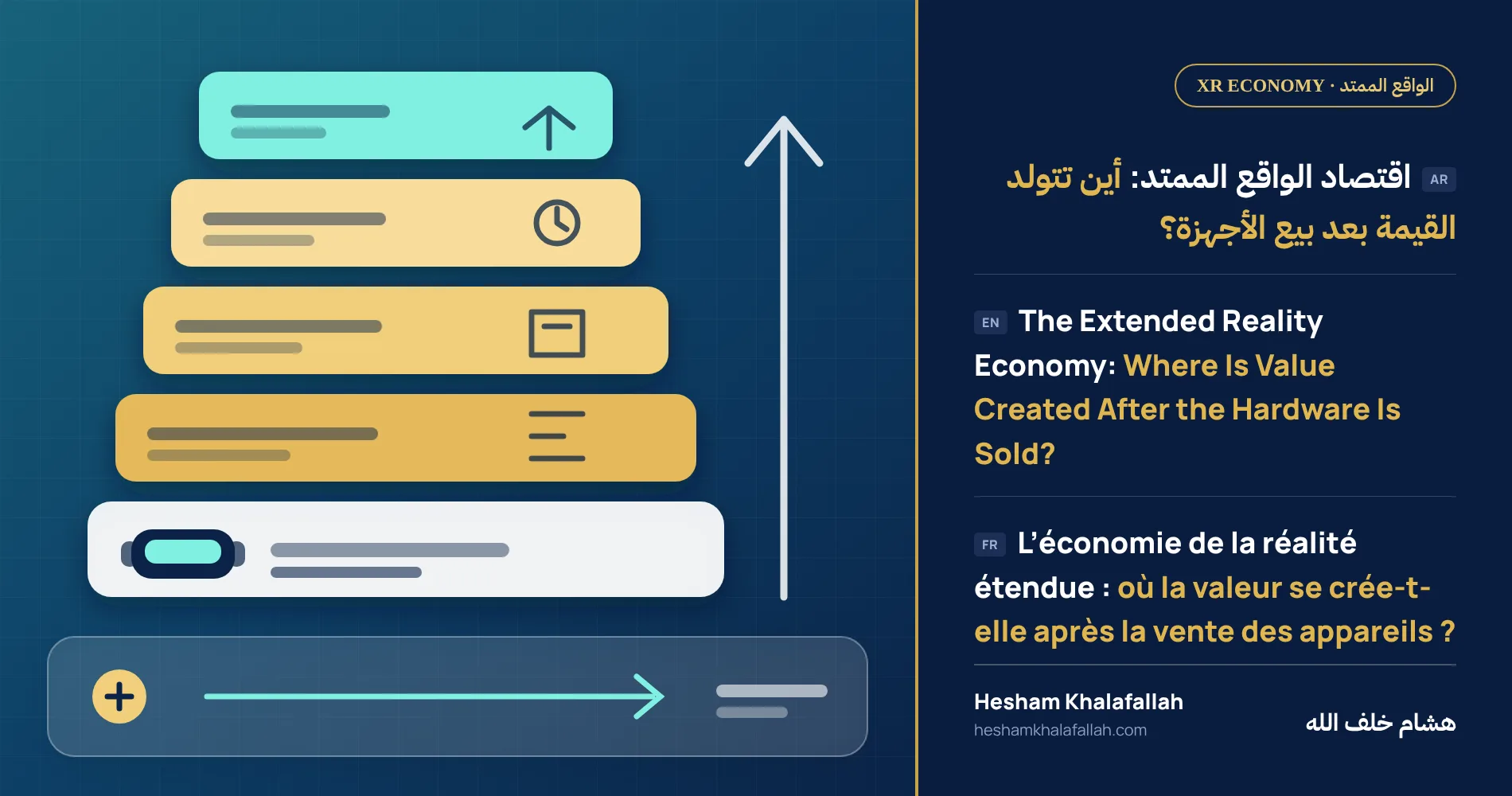
Where is value created after the sale?
I see value spread across five main layers around the device:
• Content and experiences: training programs, simulations, tours, learning material and entertainment experiences, which give the device a reason to be used.
• Software and platforms: systems to manage content, devices and users, and platforms to distribute and update experiences with ease.
• Integration and customization: connecting the solution to the organization’s systems and processes, and adapting the experience to the needs of the sector and the audience.
• Training, operation and support: preparing users and supervisors, maintaining devices and solving problems quickly, which is what ensures continuity.
• Data and impact measurement: knowing how the experience was used and what people learned or achieved, to improve the solution and prove its value.
The other side: mistakes of those who stop at the device
In all honesty, I should mention the mistakes I see repeated, because knowing them saves a great deal of money and effort:
• Buying devices before defining the use: devices are counted by number, and the question of purpose and audience is left for later.
• Ignoring the cost of content: the budget covers the device, and not enough remains to develop suitable experiences or update them.
• No training and support: devices need people who know how to operate, set up and run sessions.
• Neglecting user comfort and safety: session length, lighting, device hygiene and suitability for the age group are basics of the experience.
• Not measuring impact: if we do not know what was actually achieved, it is hard to justify continuing or expanding.
Models for creating value
There is no single model that suits everyone, but I see that lasting businesses in this field rely on a mix of these sources:
• Content licensing and subscriptions: recurring revenue for access to a library of experiences or a platform.
• Custom development projects: solutions designed for a specific body and a clear goal, such as employee training or presenting a heritage site.
• Managed services: running the experience, maintaining it and supporting users under a periodic contract.
• Training and consulting: building team capabilities, setting the plan for use and measuring impact.
• Events and live experiences: showcases at fairs, museums and conferences that introduce people to the technology and open new opportunities.
How I think before any investment in extended reality
Before I advise any body to expand, I begin with simple questions: Who is the audience? What is the problem or opportunity? How will people use the experience after a week and after a year? Who will manage operation and support? How will we measure impact? When the answers are clear, buying devices becomes a decision that follows from a plan, not a start with no destination.
I prefer to begin with a limited pilot that proves the value and reveals the operating needs, then expand gradually. This protects the investment and builds the trust of the team and the audience.
The device opens the door, but content, service and impact are what make people walk in and come back.
Conclusion
What I want readers to take away is that the extended reality economy is wider than the device market, and that the greater value is created around the device: in content, software, integration, training, support and data. Whoever understands this early plans with a more realistic budget and achieves a longer-lasting impact.
If your organization or company is considering virtual or augmented reality, in education, training, tourism or industry, I would be glad to build together a plan that starts with the goal and the audience, and arrives at a clear operating model and value.