 Hesham Khalafallah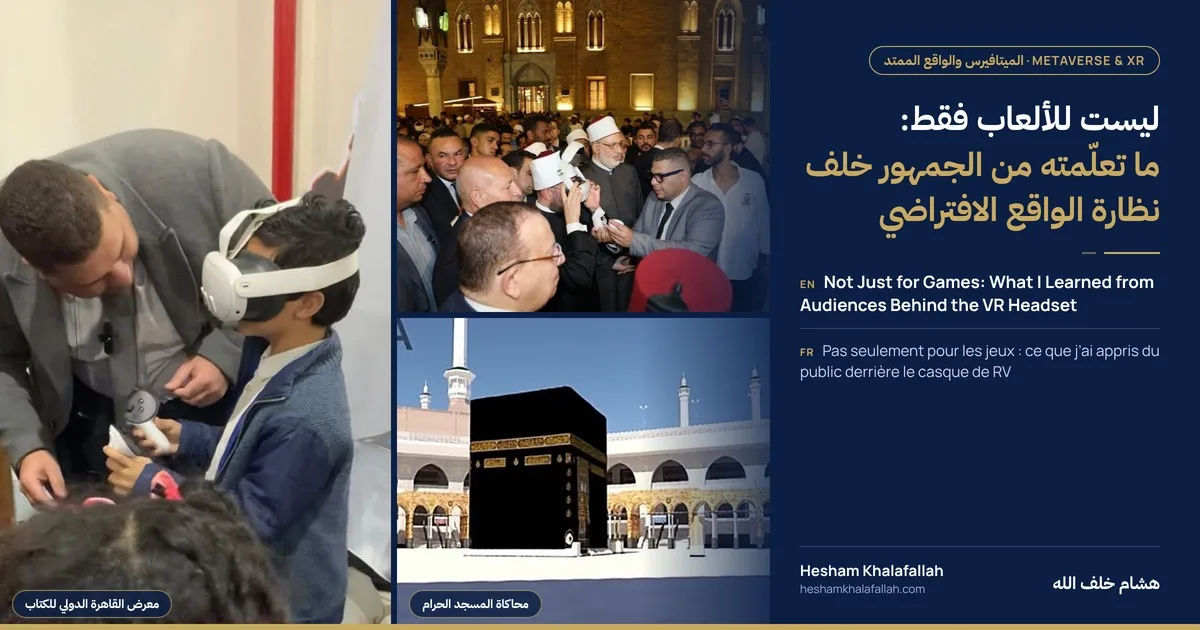
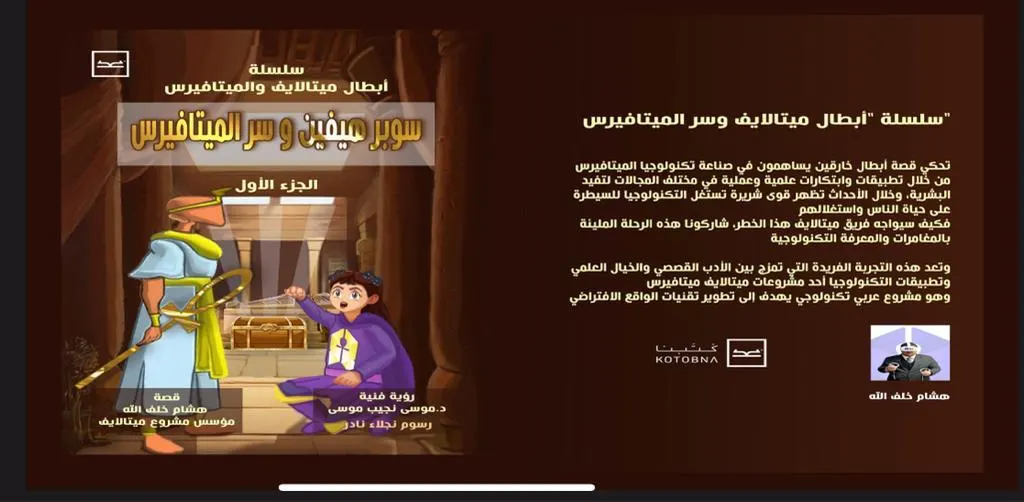
Over the past few years, our MetaLife Metaverse project has brought virtual reality experiences to a wide and diverse audience: at the Cairo International Book Fair in 2024 and 2025 with "MetaLife Heroes", with children from the "New Beginning" initiative at the Egyptian Museum, in demonstrations of the Islamic rituals simulation for scholars and officials, and at events and forums in Egypt and abroad.
Each time, I stood next to the headset to watch the same moment: the moment someone puts it on for the first time. That moment has taught me more about audiences than any study or report.
The first impression: "Isn't this for games?"
This is the sentence I heard most before any experience. The common image of a virtual reality headset is an entertainment device for young people and gamers, not a tool for learning, culture or discovering places and history. So many visitors arrive with limited expectations, and then discover a completely different world.
The other side: hesitation and difficulties
In all honesty, I should start with the side that does not appear in the photos:
• Hesitation among older visitors, especially officials: many hesitate at first to put the headset on in front of others and prefer to watch the experience on a large screen. It is an understandable reluctance, linked more to status and public image than to the technology.
• Difficulty with the controller: first-time users struggle to find the buttons and learn how to point and select, so part of the experience is lost trying to understand the device.
• Occasional loss of balance: some users feel slightly dizzy or lose their balance for a moment, especially in experiences with fast movement or when standing for a long time.
• Worry about the device itself: some visitors are afraid of breaking it or of looking unskilled in front of others, so they settle for watching.
The moment that changes everything: the Masjid al-Haram simulation
On the other hand, I have lived unforgettable moments, the clearest of them with the Masjid al-Haram simulation. More than 90% of those who tried it, according to the impressions we recorded, felt a sense of calm and the spirit and sanctity of the place from their very first use. I saw many people in tears inside the experience, because they felt as if they were truly visiting the place, some of them for the first time in their lives.
That is when I realized that the value of virtual reality goes beyond visual amazement to a human and emotional impact: bringing a distant place closer, and giving a real sense of presence.
Other scenes repeat themselves too: the first gasp of wonder when looking around, the spontaneous laughter when trying to touch something that is not there, and users coming out of the experience asking for a family member to try it.
Children and adults: two different paths to wonder
Children usually step into the experience without hesitation, learn the controller within minutes, and move through the virtual world freely and curiously. Adults need preparation, explanation and reassurance, but once they are inside, the impact on them is deeper, especially in religious and historical experiences that touch their memories and emotions.
Ten lessons for organizing virtual reality experiences
These events taught me practical lessons that I now apply at every demonstration:
• More than one headset and more than one assistant: so the wait is not long, and every user has someone to guide them.
• A safe space: dedicated to the experience and away from walkways and crowds, so users can move freely without bumping into anyone.
• A large display screen: showing what the user sees, so the audience can share the experience and hesitant visitors feel reassured before trying it themselves.
• A short briefing before starting: a minute or more explaining the controller saves users a great deal of confusion.
• Simple experiences for public demonstrations: short, clear experiences that need little movement suit first-time users.
• Seating when needed: in long experiences or for older visitors, sitting reduces dizziness and loss of balance.
• Recording audience impressions: they are the best source for improving experiences and measuring their impact.
• A reliable internet connection: some experiences and updates depend on it, and a drop ruins the demonstration.
• Face covers instead of direct disinfection: protective covers are a hygienic and practical solution, while alcohol damages the headset lenses.
• Protecting the devices from the sun: headsets should not be used outdoors in the morning or exposed to direct sunlight, which can damage the screens from the inside.
A virtual reality headset is not a toy, but a window: to a distant place, a past era, or a learning experience you will never forget.
Conclusion
What I want readers to take away from these experiences is that a virtual reality headset is not just for games. It offers varied, meaningful and useful experiences: in education, culture, history, tourism, religious awareness and children's content.
That is why, at MetaLife Metaverse, we try to stay close to people and to provide as many headsets and as many different experiences as possible at every event, so that the largest possible audience can try them and discover for themselves what this technology can offer.
If your organization is considering offering a virtual reality experience to its audience, at an exhibition, school, museum or event, I would be glad to design a suitable experience together and organize its presentation professionally.